
NATURE CLICKS #614 - YELLOW-RUMPED WARBLERS


Yellow-rumped Warbler, Frenchtown County Park, Guttenberg, Iowa

A bunch of Yellow-rumped Warblers spent the Sunday afternoon feeding from berries (Bittersweet?) and cleaning their feathers at the banks of the Mississippi River in Frenchtown Park near Guttenberg, Iowa. The one in the first photo must have taken a bath in the river. His feathers were wet and the bird cleaned and dried them in the sun.

I was out practicing with a new piece of equipment I got as a gift last month, a monopod with a small gimbal head. I want to use it mainly for small bird photography in locations that are difficult to access with a heavier tripod. I will report about it in a later post sometime.

The small ramp at Frenchtown County Park is hardly used for boat access anymore. I have seen Yellow-rumped Warblers there before but was surprised how many were present this time.
SENSE OF FALL


Savannah Sparrow, Green Island, eastern Iowa

A big house project came to an end on Friday and I finally found the time to go out with the camera again and shoot some pictures. The photo above was made about 40 minutes before sunset at the edge of a field that was already harvested. The warm rim light on the dried up flower pods intrigued me and all the elements, including some spider web threads, give the photo of this sparrow a sense of fall.

Male Red-winged Blackbird, Green Island Wetlands

Thousands of Red-winged Blackbirds congregate in the wetlands along the Mississippi River at the moment and feed or rest during their migration to warmer areas in the south. If the winter is mild, as we had it during the last couple years, some of them will even stay here or at least return very early. I have photos in my picture library that were made in February.

END OF SUMMER THOUGHTS


Monarch, Mud Lake, Mississippi Valley, Iowa

Summer comes to an end slowly but surely and beside falling leaves from the trees many other indicators can tell the story about a changing season. Temperatures are still quite a bit above average but the number of flowers and butterflies is getting lower every day. I talked to some other nature friends recently and most said they have seen more Monarch butterflies this year then during the last couple years. However, the number of Monarchs have been in decline during recent decades and every trend in reverse is a sign of hope that this species may survive. I take every opportunity to make a click with the camera when I see a Monarch, hoping that this will never end.

Monarch, Mines of Spain, Mississippi Valley, Iowa

BIRDS IN FLIGHT


Great Blue Heron, Green Island Wetlands, Mississippi Valley, Iowa

It was pretty quiet in the wetlands today, at least up to the moment when I was ready to leave in the late afternoon. Suddenly several hundred Canada Geese came across the Green Island wetlands in the Mississippi Valley and moved towards the low sitting sun in the west. They flew either in pairs or strings up to 25 birds for the next half hour. Communication with each other is obviously very important and the air was filled with their loud calls. I guess nobody gets excited here in the Midwest about Canada Geese, since they are present pretty much all year long, but many also migrate from up north, where food and open water are not available during the winter.

I saw this as a good opportunity to practice shooting birds in flight and walked with the camera and long lens onto a field to have a good view in all directions. I don’t know who was more surprised, the Great Blue Heron or I. The heron at least saw or heard me first and was already in the air when I discovered the bird. Sudden opportunities like this come and go very fast and it is exactly for these special moments why I practice handholding the long lens in order to come home with a sharp photo. The photos of the geese I made afterwards? Well, nothing but pure fun shooting pictures on a warm late summer day!

All images: Nikon Z6 III, Nikon NIKKOR Z 600 f/6.3 VR S, Nikon Z Teleconverter TC-1.4x

NATURE CLICKS #613 - RAPTOR WATCH 2025 - BROAD-WINGED HAWKS


Broad-winged Hawk, immature

Together with other members of the Dubuque Audubon Society I participated in the annual ”Raptor Watch” event in the Mines of Spain near Dubuque, Iowa today. I’m sorry for not posting anything lately, but other things in life required attention instead of wildlife photography last week.

Kettle of Broad-winged Hawks at the Mines of Spain, Dubuque, Iowa

It was great to be out again and have a camera strapped over my shoulder. In September large numbers of Broad-winged Hawks migrate to the northern part of South America and can bee seen in big flocks circling in kettles high up in the sky during migration. There are places in the Midwest where they have been seen by the thousands, but everybody on the small observation platform in the Mines of Spain was very happy to see several swirling kettles of 60-100 Broad-winged Hawks today.

My thanks goes to Tony Moline, a very knowledgable field guide as always, and all the other Audubon members that made this birding event a pleasant and great learning experience!

Broad-winged Hawk, adult bird

PEWEE VS. PHOEBE


Eastern Wood-Pewee, Mines of Spain, Dubuque, Iowa, Sep 06, 2025

Today I came across an Eastern Wood-Pewee while making a brief visit to the Mines of Spain Recreation area. Not an unusual sighting and these little flycatchers are not difficult to spot when they perch on a branch and dive down to catch insects midair or sometimes on the ground. They often return to the same perch, a fact every photographer may like.

Two weeks ago I photographed an Eastern Phoebe, right here in our woods, and that gives me the opportunity to show you how much alike these two flycatcher species look. So how to tell them apart? Here are a few details that may help.

  • The Eastern Phoebe has a dark bill, while pewees have a yellow or orange base of their lower mandible, which is very good visible in these two photos.

  • The Eastern Phoebe pumps its tail (the pewee doesn’t). That can help identification if you see for instance the bird just as a silhouette against the sky.

  • The two wing bars are less distinct on a phoebe, while they are almost white on a pewee.

  • And last but not least, if you hear the distinctive ”pee-ah-whee” song before you even see the bird, you certainly know that an Eastern Wood-Pewee is in the neighborhood.

Eastern Phoebe, Little Maquoketa Valley, Iowa, Aug 23, 2025

TURKEYS IN THE NEIGHBORHOOD


Wild Turkey, Little Maquoketa Valley, eastern Iowa

It’s not unusual to see Wild Turkeys around here in the Little Maquoketa Valley, but most of the time they hardly present themselves for a photo opportunity. During last week a gang of four showed up several times on an open grassy spot right here on the bluffs above the valley.

I can’t see them from our house because it is below that particular location, but after seeing them for two days in a row while driving, I prepared myself already at home. Put the camera in my lap, had the car window down, and drove up the short distance to the top of the hill very slowly. A short stop, the turkeys were present again, and a short burst of shots from the car was all what it took to get the photo of this nice looking male turkey.

Nikon Z6 III, Nikon NIKKOR Z 600 f/6.3 VR S, Nikon Z Teleconverter TC-1.4x,    @840mm, 1/1000 s, f/9, ISO 800

GOING FOR A BIG SNACK


Great Egret with a catch, Mississippi River, Green Island Wetlands, Iowa

When you go since a long time and frequently to the same area for wildlife photography, as it is the Green Island Wetlands in the Mississippi Valley, you may start believing, I have seen it all, no big news anymore. But nature comes often up with a big surprise and I learned this lesson again a couple days ago. So here is the little story that surrounds the two photos in today’s blog post.

When I saw this Great Egret standing beside the gravel road in front of the car I didn’t even consider to make a click. An egret standing on the road and staring down the banks on the left hand side towards the lake wasn’t really a shot I was looking for. I approached the bird very slowly, even stopped, hoping it would take off and fly away before the car came close. Usually those egrets are quite skittish and don’t let you come really close. It took me a few seconds to realize that this guy was on to something and didn’t even look at me.

Suddenly the egret pushed its sharp bill into the weeds along the banks and jumped even down. Obviously it had made a catch. I expected seeing a little frog or maybe a locust in the birds bill, but surprisingly the catch was a lot bigger! This Great Egret had caught a young muskrat, one of the four-legged critters that live in the wetlands. While the bird ”handled” its prey, means it killed the muskrat, I asked myself, how is it going to eat that big snack? The critter didn’t move anymore when I shot the first image and the time stamp on my files revealed that seven seconds later the bird had swallowed the young muskrat completely. Nature can be brutal but as a wildlife photographer I try not to be biased. It was an amazing experience and I’m glad I had the camera in my lap and was ready to document the unexpected.

STORY TELLING OVER PERFECTION


I’m a big advocate that story telling in a picture takes priority over the ”perfect shot”. This photo is probably a good example for this claim. If the American Goldfinch would be totally separated from the flower right behind it, this would be a bit better. However, a different angle of view was not an option at this location. Let’s look at the story in this photo. We are close to the end of summer and it’s time for the seed eaters, like the goldfinches, to feed their offspring or just to put some weight on for the upcoming cold seasons. The Purple Cone Flowers in the front yard, and anywhere else, are on their way out and provide plenty of food for the finches. The picture tells pretty much this story and of course, a male goldfinch is one of the prettiest birds around here…

Nikon Z6 III, Nikon NIKKOR Z 600 f/6.3 VR S, Nikon Z Teleconverter TC-1.4x, Induro GIT 404XL tripod, Induro GHB2 gimbal head, Westscott FJ80 II speed light,  @ 840mm, 1/1000 s, f/9, ISO 1250, slightly cropped,

MISSISSIPPI RIVER STORIES 2025 #5 - SUMMER AT ITS BEST


Nikon Z6 III, Nikon NIKKOR Z 600 f/6.3 VR S,   @ 1/2000 s, f/8, ISO 500

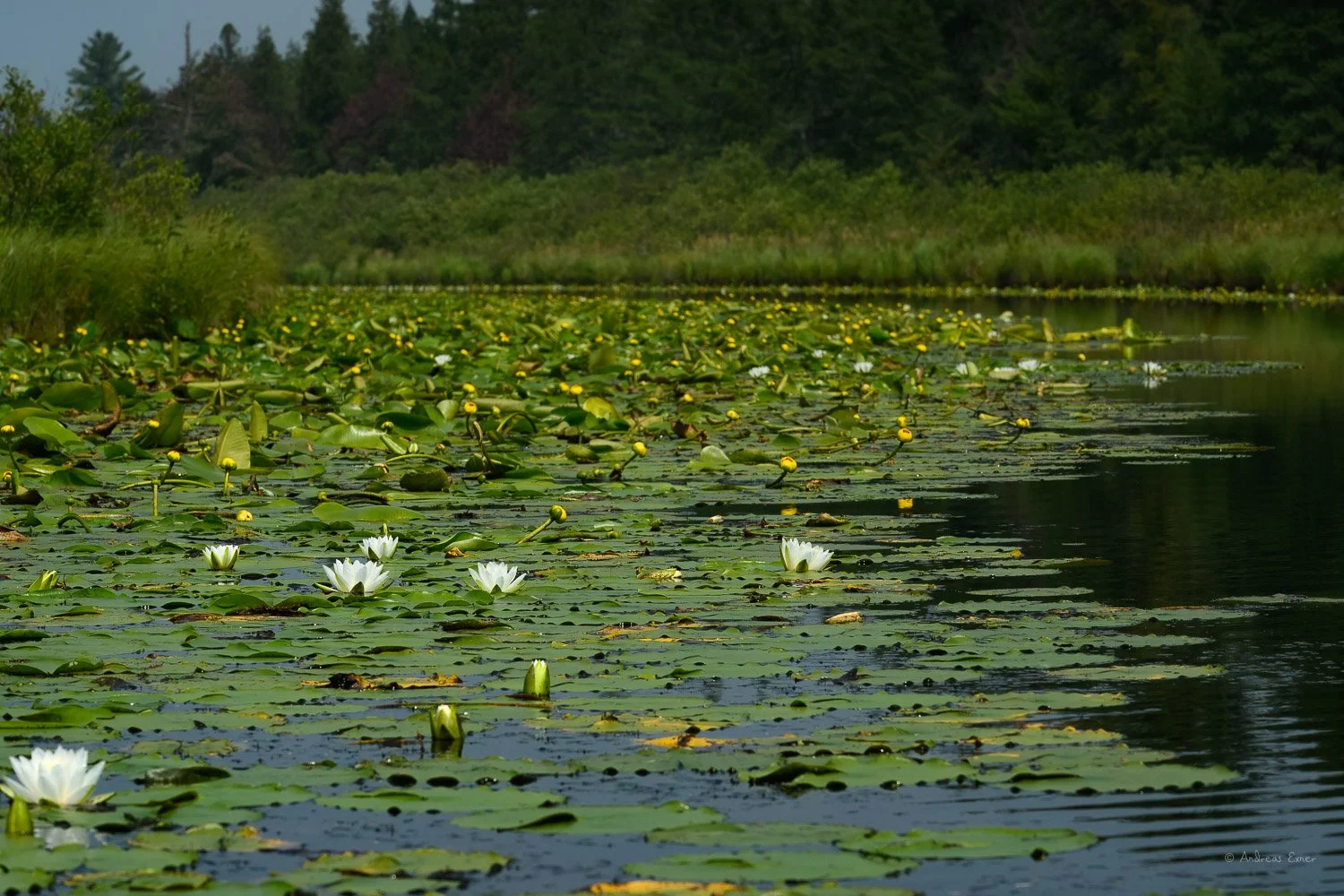
I haven’t posted another ”Mississippi River Story” since May but I like to do so at the height of the summer. The heat and very high humidity during the last weeks has been replaced by cooler temperatures, a bit of wind, nice puffy clouds at times, but we still had plenty of sunshine. All good reasons to get the kayak out for a couple paddle trips in the backwaters of the big river. The vegetation is lush and green and some flowers can still be found between the arrow heads and water lilies that grow everywhere in the Mud Lake area. The breeding season for most birds is almost over, it is a lot quieter on the water, and I had a lot less photo opportunities for wildlife. But there is always room for a surprise and a couple Great Blue Herons posed nicely within the range of the lens. I caught the first heron standing motionless in the water, like in the picture below. But the bird moved on and I missed the shot. At the second opportunity the wind pushed me almost too close to the bird but by reading its body language I knew a second ahead of time when the decisive moment would happen. This time luck was on my side.

Nikon Z6 III, Nikon NIKKOR Z 600 f/6.3 VR S,   @ 1/2000 s, f/8, ISO 500

Mississippi River, Mud Lake, Iowa,

Nikon Z6III, Nikkor Z 24-70, f/4 S,   @ 55mm, 1/320 s, f/11, ISO 100

I came back to the entrance of the marina at Mud Lake Park in the evening, hoping to get nice warm light on the puffy clouds we had all day long. Unfortunately the clouds dissolved very quickly due to the air getting drier. The blue boat came at the right time to rescue this photo. A couple minutes later the cloud show was over…

BLURRY WINGS


Adult male Ruby-throated Hummingbird

It is a good problem to have not knowing what to post first, because many things wrap around my mind and most important, plenty of clicks have been made recently.

I’m still learning the ins and outs of my new designed ”Small Bird Rig”. If you haven’t followed the blog lately, click on the link to see what I try to accomplish when photographing small birds https://exnerimages.net/blog/2025/7/8/gear-talk-testing-a-new-small-bird-rig.

Talking about small birds, the Ruby-throated Hummingbird is the smallest we have here in our neck of the woods and across Iowa. I shot plenty of images without applying a speed light in the past, but it is the subtle hint of extra light that reveals the colors of this beautiful hummingbird (German: Kolibri) much better and can make the difference between a mediocre photo and the ones I like.

Juvenile male

Ruby-throated Hummingbirds beat their wings between 50 and 80 times per second according to some sources, reaching speeds up to 200 times per second. The aspect of story telling in my photography leads intentionally to pictures that have some blur in the wings. It’s just the way we see the bird and I don’t really care about an image that shows frozen wings. It is the humming sound we all love about these birds and I think our photos should reflect this aspect.

Technically I think it’s not difficult to walk away with an image where the bird has frozen wings. Employ a higher shutter speed, mostly accomplished with much higher ISO settings and by using the speed light as your main light source, and you will get there… Well, the story about this tiny little bird may not be told that way, so feel free to bare with the blurry wings in my photos…. 😊

Nikon Z6 III, Nikon NIKKOR Z 600 f/6.3 VR S, Induro GIT 404XL tripod, Induro GHB2 gimbal head, Westscott FJ80 II speed light,

PADDLING IN THE NORTHWOODS


This juvenile Common Loon was still fed by its parents, but not every dive for food was successful. First time that I was able to make some clicks of loons with their offspring. Fay Lake, Florence County, Wisconsin

I’m back from two different trips to the Northwoods. The second one led to well known territory in northern Wisconsin. Most of the time I have been there for little ice fishing adventures with friends each year in January, but this time the kayak was on top of the car roof while traveling.

I like to share some photos from last weekend that were shot during three paddling trips. The wildfires up in Canada made for unpleasant air conditions and I didn’t really like how most of my landscape pictures turned out. However, there were some good encounters of wildlife, mostly birds, and I saw even a bear crossing the road. I hope you enjoy!

A pair of Trumpeter Swans navigated their five cygnets through the weeds into shallow water near the shore of Fay Lake.

Juvenile Spotted Sandpiper, Wabikon Lake, Forest County, Wisconsin

For almost four hours I enjoyed a paddling trip on the Popple River, deep in the woods of Chequamegon-Nicolet National Forest. No humans, no men-made noise, just the tranquillity of pure nature. It doesn’t get much better… 😊

FEEDING A HUNGRY BUNCH


Second brood of House Wrens in the bird box

It’s not just the bluebirds that raise a second brood in our backyard. As other years before the House Wrens feed young birds again. About a week ago I checked the bird box and counted six eggs in the nest. I checked again yesterday and it looks like all have hatched, although it was impossible to count the nestlings in this little bowl of feathers.

In this humid and warm weather here in eastern Iowa at the moment there are plenty of insects and larvae. Both parents feed with high intensity. Here the female went into the box with food in its bill. A few seconds later the male often shows up and passes his catch to the female. In this instance the female didn’t take it but the male House Wren went to the nest after the female had left.

It amazes me always how big of a prey these baby birds can swallow. Look at the size of the bug in the male’s bill!!

AT THE MARTIN TOWERS


Purple Martin tower at Mud Lake Park

I had an opportunity this morning to watch the counting of eggs and nestlings of the Purple Martins down at Mud Lake by the Mississippi River. Together with some staff from the County Conservation and their kids we were invited to see how the nest gourds are maintained and kept clean during and after the time of incubation.

Ry, on the right, had lowered the gourd rack to the ground and then opened each one briefly. The kids helped counting and put the results in a tracking list for later evaluation. I was allowed to point the camera into the opening of one of the gourds so I can show you now how it looks inside with most of the martins already hatched.

Some of the chambers required a little more maintenance. When the nesting material was infested with bugs and possibly parasites, Ry carefully placed the young Purple Martins in a bucket for a short time, emptied the gourd, and replaced the old infested nesting material with new wood chips, or sometimes uses pine needles. This all happens calmly and relatively quick, so the gourd rack can be cranked up and the parents are able to feed the hungry bunch in the nests again.

It was an exciting experience, including some good conversation with everybody who was there. Thank you to Ry for a good explanation of the process and to Mike for inviting me!

Purple Martins at Finley’s Landing, 07/15/2025

SOCIAL LIFE AT THE MARTIN TOWER


Male Purple Martin returning to the nest

This is the photo I was hoping to get during my last two visits at the Purple Martin tower at Finleys Landing down by the Mississippi River. The Purple Martins are beautiful looking birds, elegant flyers, and it is very interesting to watch their social behavior. The young martins have hatched and it is such a great joy just to watch the interactions at a breeding tower.

For most of my wildlife photography I try to keep any men-made elements out of the frame, but here I make an exception, supported by a note I found on the Cornell website (https://www.allaboutbirds.org/guide/Purple_Martin/) :

Native Americans hung up empty gourds for the Purple Martin before Europeans arrived in North America. Purple Martins in eastern North America now nest almost exclusively in birdhouses.

With other words, we enjoy wildlife that has adapted to men-made nesting places since a long time. The towers hold 18 chambers for a Purple Martin nest and at Finleys Landing it looked like almost all were taken. These towers with their plastic gourds may look not very pretty, but the practicality for maintenance (cleaning after the breeding saison) and doing research studies (counting eggs, etc.) is proven. Well, most importantly the Purple Martins must like them and it is so exciting to see how quick the birds accepted the relative new tower at this location.

The nestlings peak out of the box but after the female on the left departed for catching more food, the male on the right pushed them back into the box with his head, I guess using his parent authority…

It seemed like some of the juveniles had already left the nest but this is a matter of interpretation. The juvenile Purple Martins look almost identical to the females that tend them. I’m not sure if this is a jealous female or a young one begging for food. Its clumsy behavior made me believe the latter.

Purple Martins are supposed to be monogamous but that doesn’t mean they can’t be jealous. The male in the center had a happy life until another male didn’t like it, flew in and used its bill vigorously to end the affair. It took less than two seconds and I shot this scene in high-speed shutter release mode with about 14 frames per second. Everybody left the scene uninjured… (June 28th, 2025)